
RESILIENT ENVIRONMENT│FUTURE│FIRE SAFETY & REGULATIONS
NATURE IN CONSTRUCTION
Architecture should not merely protect human life, but actively improve it. Exploring the potential of vertical green structures in UK high-rise residential buildings following the Grenfell tragedy, this dissertation investigates how sustainability, human wellbeing and fire safety can coexist without compromising one another.
Eight years after the Grenfell disaster of 2017, the UK continues to grapple with its consequences. (Apps, 2022) The tragedy exposed fundamental flaws in architectural practices, construction oversight, and the handling of materials. (Wilkinson, 2018) Initial investigations revealed that cladding made of flammable materials played a critical role in the rapid spread of the fire, ultimately sealing the building's fate.
Since then, numerous buildings with similar cladding systems have undergone remediation, with materials being stripped and replaced. The Building Safety Act 2022 aims to address these issues by introducing stricter regulations and new legislation, particularly concerning cladding systems in high-rise buildings. (Saunders, 2023) These regulations prioritize safety and impose greater responsibility on architects, significantly limiting their design freedom. This raises questions about the future of Sustainable Design in the UK. This paper specifically focuses on one type of Vertical Green Structures – living walls.
Several sources have highlighted the flammability and increased fire risk associated with Vegetative wall systems (Zhen et al., 2024), raising concerns about their feasibility under the new regulations. This paper focuses on exploring strategies to adapt and evolve these designs to meet UK legislative requirements. Its primary scope is limited to examining green living walls designs, specific to the UK. A broader investigation into other sustainable architectural approaches will be necessary to address the full spectrum of challenges. Through a careful research of the Grenfell Tragedy and its consequences for the UK Construction Regulations, this study aims to identify methods for improving the fire safety of living walls without compromising their sustainability benefits. Diagrams and other types of visual graphics will be used to support the arguments and provide detailed exploration of key elements, potential hazards and key points in both Grenfell Tower and Bio-walls.
In the context of the current climate crisis, designing buildings with sustainability in mind has become crucial. The UK is working toward achieving net-zero emissions by 2050 to combat global warming. (HM Government, 2021). Vertical ecosystems hold significant potential to contribute to this effort. These structures not only generate oxygen but also help reduce urban temperatures, making them valuable tools for meeting sustainability targets and improving overall living conditions. (Falke, 2025).
…We ignore the smell of plastic losing shape
the way those with money learn to avert their eyes
and keep blank faces while gambling
other people’s futures…
- Fetuga, R. (2021) “For Grenfell”
Balancing Sustainability and Safety: The Future of Vertical Green Structures in UK High-Rise Residential Buildings Post-Grenfell
This research explores the viability of living walls within the context of the UK’s post-Grenfell building safety regulations. Following the 2017 disaster, heightened scrutiny over cladding systems has raised concerns about the fire risk of vegetative wall structures. Focusing specifically on the intersection of fire safety and sustainable design, this study examines how living walls can be adapted to meet legislative requirements without compromising their environmental benefits. Through case studies, proper categorisation, and regulatory review, the research aims to explore living green walls from both design and regulatory perspective in the evolving landscape of UK architecture.
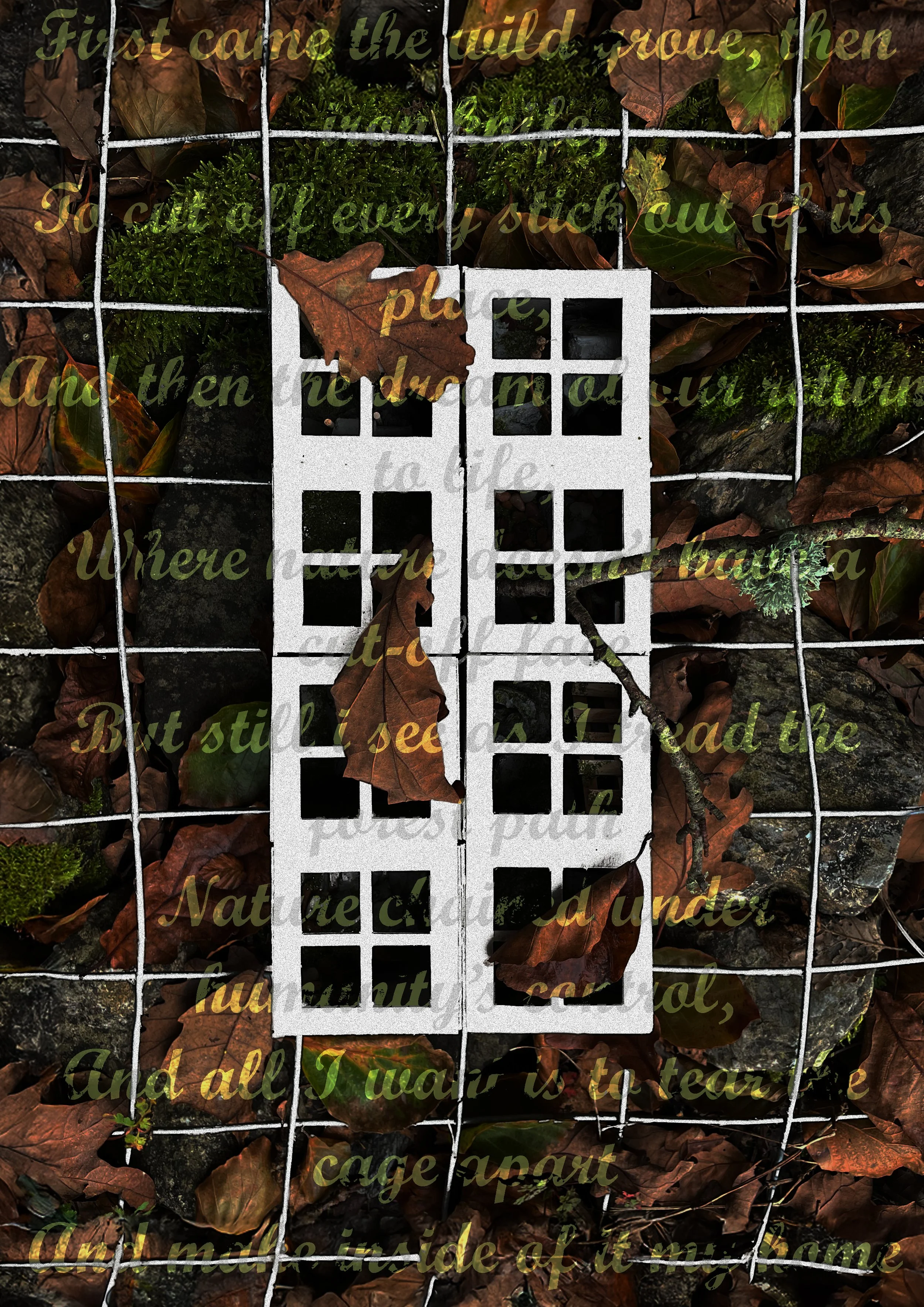
“First came the wild grove, then iron knife,
To cut off every stick out of its place,
And then the dream of our return to life,
Where nature doesn’t have a cut-off face
But still i see as I tread the forest path
Nature chained under humanity’s control,
And all I want is to tear the cage apart
And make inside of it my home”
- Streltsova, E. (2024) “GlamRockPoet”
Personal Manifesto
What is the future of architecture?
As natural resources become increasingly scarce, material costs continue to rise, and the global population grows, so does the demand for housing. Yet, with the increasing pressure to deliver affordable accommodation, an important question emerges:
how do we balance affordability, quality, sustainability and, most importantly, human safety?
The Grenfell Tower tragedy of 2017 exposed profound failures within the construction industry. Decisions made throughout the building's refurbishment had devastating consequences, not for those who made them, but for the people who called the building their home. The tragedy revealed systemic shortcomings in regulation, accountability and professional responsibility, raising fundamental questions about whose interests architecture ultimately serves.
In response, the UK introduced significant changes to building safety legislation, strengthening regulatory oversight and placing greater emphasis on the protection of residents. However, legislation alone cannot resolve the underlying issues. What must also change is the culture of the construction industry itself. We must move beyond solutions driven primarily by cost and aesthetics towards an approach that genuinely places people first. Architecture should not simply provide spaces in which people can survive, but environments in which they can truly live. This means considering not only structural integrity and fire safety, but also the profound influence of the built environment on physical and mental wellbeing.
Nature has an important role to play in this relationship.
As humans, our connection to the natural environment is fundamental. Numerous studies have demonstrated the positive effects of access to greenery on psychological wellbeing, stress reduction and physical health. Yet, as cities continue to expand and urban density increases, opportunities for meaningful interaction with nature are often diminished.
At the same time, the consequences of climate change are becoming increasingly apparent. Rising temperatures, air pollution, extreme weather and the urban heat island effect present growing challenges to our cities. Vegetation can contribute to mitigating some of these effects through shading, evaporative cooling, air filtration and the support of urban biodiversity.
Architects have both the opportunity and responsibility to reconsider how nature is integrated into the built environment.
Protecting existing trees and introducing replacement planting are important measures, but are they sufficient?
As available urban land becomes increasingly limited, perhaps we must begin to look beyond conventional approaches to landscaping and consider how greenery can become an integral part of architecture itself.
Rather than treating nature as something that surrounds our buildings, why not consider it as something that can become part of them?
The relationship between vegetation and architecture is far from a contemporary invention. From ancient Roman gardens and climbing vines to the ivy-covered buildings familiar throughout Britain, plants have long coexisted with the built environment. Even abandoned structures demonstrate nature's remarkable ability to reclaim architecture over time.
What if, instead of allowing this relationship to develop by chance, we began to design for it intentionally?
Vertical green structures, including green façades and living walls, offer one potential approach. By introducing vegetation directly onto building envelopes, these systems may provide environmental and wellbeing benefits without requiring substantial additional land. However, their implementation presents challenges, particularly in the context of high-rise residential architecture in the United Kingdom.
Following the Grenfell Tower tragedy, increased scrutiny of external wall systems and the introduction of stricter fire safety requirements have raised important questions about the suitability of vegetative façades. Although living walls often incorporate irrigation systems and moisture-retaining growing media, the assumption that vegetation is inherently resistant to fire cannot be taken for granted. Plant species, seasonal changes, maintenance, system components and moisture conditions can all influence fire behaviour.
This creates an important tension between two essential architectural priorities: the responsibility to protect human life and the ambition to create healthier, more sustainable buildings.
But must these priorities exist in opposition?
Could vertical greenery be developed and integrated in ways that respond to both environmental ambitions and the rigorous demands of building safety?
What design strategies, materials and regulatory considerations might make this possible?
These questions formed the foundation of my dissertation, Balancing Sustainability and Safety: The Future of Vertical Green Structures in UK High-Rise Residential Buildings Post-Grenfell. Through the examination of existing case studies, the categorisation of vertical greening systems and a critical review of the evolving UK regulatory framework, this research explores the viability of living walls and green façades within high-rise residential architecture. Ultimately, the dissertation does not seek to argue that greenery should be introduced at the expense of safety. Rather, it questions how these priorities might be reconciled through responsible design, technical innovation and further research. Because the future of architecture should not require us to choose between buildings that protect life and buildings that improve it.
Interested?
Balancing Sustainability and Safety: The Future of Vertical Green Structures in UK High-Rise Residential Buildings Post-Grenfell
You can read my dissertation by clicking the button bellow